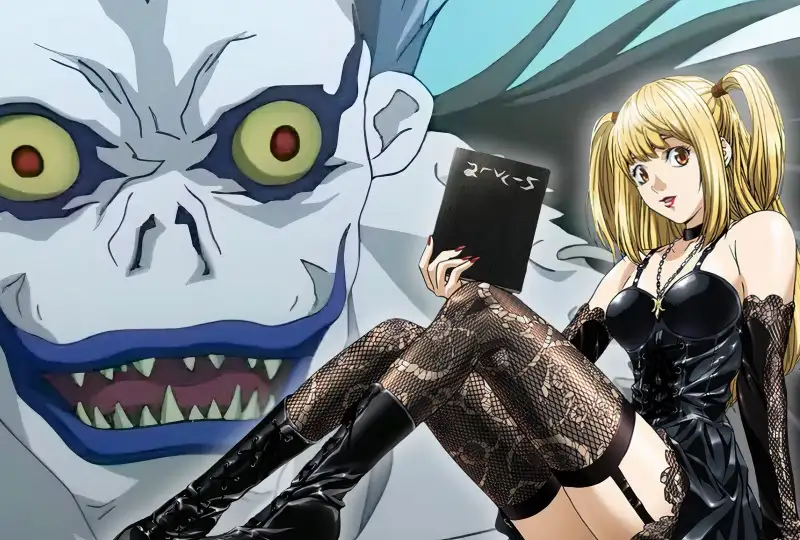
Welcome, fellow enthusiasts of sequential art, to 'death note manga online'! Today, we embark on a journey through the vibrant, often tumultuous, and endlessly fascinating world of digital comics. What began as a passionate, grassroots effort by fans to share their favorite stories has blossomed into a multi-billion dollar industry, fundamentally transforming how we consume manga, manhwa, and webtoons. This isn't just a story about technology; it's a saga of community, creativity, legal battles, and the unyielding desire for captivating narratives.
For many of us, the thrill of discovering a new chapter of a beloved series like Death Note online was an integral part of our formative years. Before official translations were widespread, before dedicated apps graced our smartphones, there was a frontier of digital wild west where scanlation groups reigned supreme. This comprehensive exploration will delve into the origins of this digital revolution, trace its evolution through the rise of webtoons, examine the industry's pivot towards official platforms, and peer into the exciting, uncertain future of digital comics.
The Golden Age of Scanlation: For Love of the Art
The story of digital comics truly begins in the late 1990s and early 2000s, an era often dubbed the 'Golden Age of Scanlation'. Before widespread internet access and high-speed connections, dedicated fans, driven by an insatiable hunger for manga not yet available in their native languages, took matters into their own hands. These pioneers would acquire raw Japanese manga volumes, often through expensive imports, meticulously scan each page, translate the dialogue, typeset it into speech bubbles, and then painstakingly clean and edit the images. The entire process was a labor of love, requiring significant time, technical skill, and linguistic proficiency.
The primary motivators were clear: speed and accessibility. Official English releases of manga were notoriously slow, often lagging years behind their Japanese counterparts. Many niche series never saw an official translation at all. Scanlation groups, operating on forums, IRC channels, and eventually dedicated websites, filled this void, providing fans with timely access to new chapters, sometimes within days or even hours of their Japanese release. This accelerated access was crucial for building global communities around series like One Piece, Naruto, and yes, Death Note, allowing international fans to participate in real-time discussions and speculation.
However, this 'golden age' was not without its shadows. Operating in a legal gray area, scanlators often faced accusations of copyright infringement, though many argued their work served as free promotion, generating demand for official releases once they became available. The quality varied wildly, from professional-grade translations and clean edits to hasty, error-ridden jobs. Consistency was also an issue; groups could disband unexpectedly, leaving series unfinished. Yet, despite these challenges, scanlation undeniably played a pivotal role in popularizing manga globally, cultivating a massive international fanbase that publishers would eventually recognize.
The Korean Wave: The Rise of Manhwa and Webtoons
As the digital landscape matured, a new force emerged that would irrevocably alter the trajectory of digital comics: Korean manhwa and, more specifically, webtoons. Unlike traditional Japanese manga, which evolved from print and typically follows a right-to-left, page-based format, webtoons were born digital. Optimized for vertical scrolling on smartphones and computers, they offered a new reading experience: vibrant full-color art, elongated panels designed for seamless flow, and often a more episodic structure perfectly suited for quick daily reads.
The popularity of platforms like Naver Webtoon (LINE Webtoon internationally) and Daum Webtoon in South Korea exploded in the late 2000s and early 2010s. This vertical-scrolling format, combined with a diverse range of genres from romance and fantasy to thrillers and slice-of-life, quickly captivated audiences beyond Korea's borders. International fans, initially relying on fan translations similar to manga scanlations, soon found official platforms launching global services, recognizing the immense untapped market.
The rise of webtoons presented both new challenges and opportunities for the scanlation community. While many fan translators transitioned to webtoons, the official platforms often had more aggressive global release strategies, sometimes publishing chapters simultaneously with their Korean counterparts. This reduced the 'gap' that scanlators traditionally filled. Moreover, the digital-first nature meant there were no physical volumes to scan, requiring different methods for content acquisition. Nevertheless, webtoons firmly established digital-native comics as a legitimate and incredibly lucrative art form, influencing even traditional manga artists to consider digital-first strategies.
The Business Awakens: Official Platforms and the Path to Legalization
The exponential growth of the digital readership, fueled by scanlation and the webtoon phenomenon, did not go unnoticed by the traditional publishing industry. Recognizing the vast, engaged global audience and the immense revenue potential, major publishers and new digital-first companies began to invest heavily in official digital distribution platforms. This marked a significant pivot, moving from a reactive stance against 'piracy' to a proactive strategy of providing legal, high-quality alternatives.
Platforms like Crunchyroll Manga, Viz Manga, Shonen Jump+, Comixology, and dedicated webtoon apps such as Webtoons, Tapas, Lezhin, Manta, and many others emerged as legitimate storefronts and reading portals. These platforms offered numerous advantages over their unofficial counterparts: superior image quality, professional translations, consistent release schedules, and, crucially, direct financial support to the creators and publishers. Readers could now enjoy their favorite series guilt-free, knowing their subscriptions or purchases contributed to the artists' livelihoods.
However, the transition wasn't without its hurdles. Initial challenges included regional licensing restrictions, which meant a series available in one country might not be accessible in another. Pricing models varied, from free-to-read with ads, to subscription services offering unlimited access, to pay-per-chapter or volume. Moreover, the speed of official releases, while improved, sometimes still lagged behind the most agile scanlation groups, especially for new chapters of highly anticipated series. Despite these initial growing pains, the official platforms steadily gained traction, offering libraries of thousands of titles, often with exclusive content and simultaneous releases with Japan/Korea, significantly eroding the necessity for many forms of scanlation.
Scanlation Today: A Shifting and Evolving Landscape
In the current ecosystem, scanlation still exists, but its role has profoundly shifted. It's no longer the primary gateway for most mainstream series, especially those with robust official English releases. Instead, scanlation today often occupies a few distinct niches:
- Speed for the Most Impatient: For the most popular weekly or bi-weekly series, scanlations might still appear hours or days before official releases, catering to a segment of the fanbase unwilling to wait. This 'race' for speed often comes at the cost of translation quality or editing polish.
- Unlicensed Series: A vast number of manga and manhwa titles are still not officially licensed for international release. Scanlators continue to fill this void, bringing lesser-known or niche series to an English-speaking audience, sometimes acting as de facto scouts for publishers.
- Completed Series Archive: Many scanlation sites serve as archives for older, completed series that may no longer be available on official platforms or were never licensed digitally.
- Educational/Reference: Some scanlations are produced for academic or comparative study, though this is a very niche segment.
The ethical debate surrounding scanlation continues. While many argue it's a form of piracy, infringing on creators' rights, others contend that it serves as valuable promotion, generating interest that eventually funnels readers towards official products. There's also the argument of accessibility for regions where official content is unavailable or unaffordable. However, as official options become more prevalent and affordable, the 'promotion' argument for scanlation becomes increasingly tenuous for widely available series.
The landscape is also shaped by legal actions. Publishers are more actively pursuing and shutting down large-scale scanlation operations, making the environment more challenging for illegal distributors. This pressure, combined with the convenience and reliability of official sources, has undeniably pushed many readers towards legal options.
The Creator's Perspective: Reaching Global Audiences
For the creators themselves – the mangaka, manhwa artists, and writers – the digital revolution has been a double-edged sword. On one hand, scanlation, in its early days, undoubtedly played a role in showcasing their work to a global audience, building fanbases they might never have reached through traditional means. The viral spread of a series could create immense hype, as seen with Attack on Titan or Solo Leveling.
On the other hand, widespread unauthorized distribution directly impacts their livelihoods. Every illegal read is a potential lost sale or subscription, making it harder for creators to be fairly compensated for their art. This is particularly crucial for artists in industries known for demanding schedules and relatively low initial pay. The shift to official digital platforms has been a godsend for many, providing legitimate revenue streams and allowing them to focus on their craft without the constant threat of 'piracy'.
The global market for comics is now larger and more accessible than ever. Artists from South Korea, Japan, China, and even Western countries can now find an international audience directly through platforms designed for global distribution. This fosters greater diversity in storytelling and art styles, breaking down geographical barriers and enriching the entire ecosystem of sequential art. The dream for many creators is simply to tell their stories and be able to make a living doing so, a dream that legal digital distribution is increasingly making a reality.
The Reader's Dilemma: Navigating a Sea of Choices
For the modern digital comic reader, the landscape is richer and more complex than ever before. Gone are the days when scanlation was often the only option. Now, readers face a 'dilemma of choice': where to read, how to support creators, and what constitutes ethical consumption.
Official platforms offer numerous benefits: superior image quality, professional translations and localization, consistent updates, and often bonus content like author notes or concept art. They are reliable and, crucially, ensure that a portion of the revenue goes directly back to the creators, fostering a sustainable industry. Many platforms also offer curated experiences, personalized recommendations, and community features.
However, the sheer number of platforms can be overwhelming. Some series are exclusive to certain apps, forcing readers to juggle multiple subscriptions or purchases. Regional restrictions still exist for some content. And for those on a strict budget, the cumulative cost of multiple subscriptions can be prohibitive, leading some to still seek free (and often illegal) alternatives.
The most responsible approach for readers is to prioritize official sources whenever possible. Subscribing to a platform like Shonen Jump+, Webtoons, or Manta, or purchasing digital volumes from storefronts like Kobo or Kindle, are direct ways to support the artists and the industry. For series that are not officially available, the ethical waters become murkier, and some might argue that scanlation fills a necessary gap in introducing new works to a global audience. The key is awareness and making informed choices that align with one's personal ethics and financial capacity.
The Future of Digital Comics: Innovation on the Horizon
What does the next decade hold for digital manga, manhwa, and webtoons? The pace of innovation suggests a future that is even more dynamic and reader-centric. We can anticipate several key trends:
- Further Consolidation and Specialization of Platforms: While many platforms exist, there may be some consolidation or clearer specialization (e.g., one platform for shonen, another for romance, etc.) to streamline the reader experience.
- Enhanced Digital Experiences: Beyond vertical scrolling, we might see more interactive elements, subtle animations, integrated sound effects, or even personalized pathways within stories. VR/AR integration could offer entirely new ways to immerse oneself in a comic world.
- AI-Powered Translation and Localization: Artificial intelligence is already making strides in translation. While human translators will remain crucial for nuance and cultural context, AI could significantly speed up the initial translation process, making even more content available globally at a faster pace.
- Global Simultaneous Releases: The goal for many publishers is to achieve simultaneous global releases for all new chapters, effectively eliminating the 'wait gap' that traditionally fueled scanlation.
- New Business Models: Beyond subscriptions and pay-per-chapter, we might see more innovative models, such as NFT-based ownership of digital chapters, fan-supported creator models (Patreon-style), or even 'choose-your-own-adventure' style interactive comics where reader decisions influence the narrative.
- Data-Driven Content Creation: Platforms collect vast amounts of reader data. This data can inform creators about popular genres, character archetypes, and plot devices, potentially leading to more targeted content creation, though care must be taken not to stifle artistic innovation.
- Cross-Media Integration: The synergy between comics and other media (anime, live-action dramas, games) will only intensify. Digital platforms will likely become central hubs for these interconnected universes, offering seamless transitions between reading a comic and watching its adaptation.
The role of scanlation will likely continue to diminish for mainstream, officially licensed content, becoming even more focused on niche, unlicensed works or as historical archives. The emphasis will be squarely on legal, high-quality, and rapidly accessible official content, driven by a global community that values both the stories and the creators behind them.
Conclusion: A Continuously Evolving Narrative
From the clandestine forums where fans painstakingly translated early Death Note chapters to the sleek, sophisticated apps that now deliver thousands of titles to our fingertips, the journey of digital manga, manhwa, and webtoons has been nothing short of revolutionary. It's a testament to the enduring power of storytelling and the relentless passion of both creators and readers.
The era of raw, often legally dubious, scanlations paved the way for a more mature, legitimate industry. While the thrill of the 'underground' may have faded for many, it has been replaced by the immense satisfaction of knowing that our enjoyment directly supports the artists who bring these incredible worlds to life. As we look to the future, we anticipate a landscape rich with innovation, global accessibility, and an ever-expanding universe of captivating narratives waiting to be discovered. So keep reading, keep exploring, and keep celebrating the magic of digital comics – the adventure has only just begun!