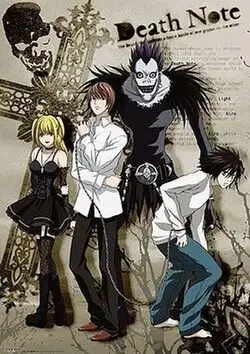
Few series have gripped the imaginations of fans worldwide quite like Tsugumi Ohba and Takeshi Obata's Death Note. More than just a supernatural thriller, it’s a profound psychological drama, a morally ambiguous chess match played out by some of the most meticulously crafted characters in fiction. The allure of Death Note lies not just in its ingenious plot twists and high-stakes cat-and-mouse game, but in the intricate tapestry of its cast. Each character, from the central protagonists to the seemingly minor players, serves a crucial role, contributing to the series' philosophical debates on justice, power, and humanity.
At its heart, Death Note asks a fundamental question: What defines justice, and what happens when an ordinary human is given the power of a god? The answer is explored through its diverse and compelling personalities, whose motivations, flaws, and intellect drive the narrative forward with relentless intensity. In this comprehensive exploration, we delve into the brilliant minds and damned souls that inhabit the world of Death Note, examining their individual contributions, their complex relationships, and their lasting impact on the series' enduring legacy.
Light Yagami (Kira): The Prodigy Turned Tyrant
Our journey begins with Light Yagami, the brilliant, bored high school student whose life irrevocably changes the moment he discovers the Death Note. Initially presented as an idealistic prodigy disgusted by the corruption and crime in the world, Light embodies the seductive power of a righteous cause. His initial motivation to use the Death Note for good, to rid the world of criminals and create a utopia, resonates with a dark fantasy many might harbor. He genuinely believes he is doing good, taking on the mantle of a god – 'Kira' – to purify the world.
However, Light's descent into megalomania is one of the most compelling character arcs in modern fiction. As the body count rises and the world trembles before Kira, Light's idealism curdles into a chilling authoritarianism. His sense of justice becomes absolute, his judgment infallible. Anyone who opposes Kira, even those fighting for traditional justice, becomes an obstacle to be eliminated. This transformation is horrifyingly gradual and believable; each kill, initially rationalized, further desensitizes him, stripping away his humanity and replacing it with a cold, calculated ruthlessness. Light's intelligence is his greatest asset and his ultimate flaw. He orchestrates elaborate schemes, manipulates individuals with surgical precision, and anticipates his opponents' moves with an almost supernatural foresight. Yet, his hubris, his unshakeable belief in his own superiority, ultimately leads to his downfall. He becomes so intoxicated with power and his 'god' complex that he overlooks the human element, the unpredictability of others, and the inherent flaws in his own absolute vision of justice. Light Yagami is a testament to the idea that power corrupts, and absolute power corrupts absolutely, painting a terrifying portrait of what happens when an individual is given unchecked authority to impose their will upon the world.
L Lawliet: The Enigmatic Detective
Opposite Light stands L Lawliet, the world's greatest detective, a figure as eccentric as he is brilliant. Introduced shrouded in mystery, L's signature quirks – his perpetually hunched posture, his insatiable sweet tooth, his unique way of holding objects – are instantly iconic. These eccentricities, however, mask an intellect that is Light's only true match. L approaches the Kira case with a detached, almost scientific curiosity, viewing it as a puzzle to be solved. His methods are unconventional, often provocative, and always designed to push Kira into revealing himself.
L's sense of justice contrasts sharply with Light's. For L, justice is about truth, procedure, and catching the perpetrator, regardless of their supposed 'good' intentions. He believes in the established legal framework, imperfect as it may be. What makes L so compelling is his capacity for intuition alongside his logical prowess. He 'feels' that Light is Kira long before he has concrete evidence, a testament to his profound understanding of criminal psychology. Despite his unusual demeanor, L possesses a surprising depth of character, displaying moments of genuine concern and even a subtle, almost childlike longing for friendship, particularly with Light. His loneliness is palpable, a byproduct of his extraordinary intellect and the secretive nature of his work. L's death marks a pivotal moment in the series, a heartbreaking victory for Light, but his legacy, his methods, and his unwavering pursuit of the truth continue to influence the narrative long after his physical presence is gone, setting the stage for his successors.
The Cerebral Chess Match: Light vs. L
The dynamic between Light and L is the beating heart of Death Note's first half. Their rivalry is an exhilarating intellectual duel, a masterclass in psychological warfare. It's a game of wits where every move, every counter-move, is fraught with tension and potentially fatal consequences. They are two sides of the same coin: brilliant, manipulative, and utterly convinced of their own righteousness. Their interactions are charged with an unspoken understanding, an almost grudging respect for each other's intellect, even as they tirelessly plot each other's demise. This mutual intellectual engagement elevates their struggle beyond a mere good-versus-evil narrative, transforming it into a fascinating study of philosophical conflict.
Misa Amane: The Devoted Follower and Second Kira
Misa Amane, a popular idol and the second Kira, introduces a new, volatile element to the cat-and-mouse game. Driven by an intense, almost fanatical devotion to Kira, who punished the murderers of her parents, Misa is willing to do anything for Light. Her acquisition of a Death Note and the Shinigami Eyes – which allow her to see the names and lifespans of others – makes her an invaluable, albeit sometimes reckless, asset to Light. Misa's character is often seen as a tragic figure. Her love for Light is unconditional and unwavering, blinding her to his manipulative nature and the atrocities he commits. She repeatedly shortens her own lifespan by trading for the Shinigami Eyes, a testament to her profound loyalty and self-sacrifice.
Despite her bubbly and sometimes ditzy exterior, Misa possesses a fierce determination and a capacity for cruelty when it comes to defending Light or Kira's cause. Her emotional decision-making often clashes with Light's cold calculations, creating both opportunities and significant risks for him. Misa's existence complicates Light's plans, forcing him to adapt and improvise, often leading to some of the series' most memorable moments. Her role highlights the theme of manipulation and the lengths to which devotion can be exploited, ultimately leaving her a broken and empty shell after Light's demise.
The Shinigami: Observers and Catalysts
The Shinigami, or Death Gods, are the otherworldly beings who own the Death Notes. They are crucial to the narrative, serving not just as supernatural elements but as observers, catalysts, and, in some cases, surprisingly complex characters themselves.
Ryuk: The Bored Observer
Ryuk is perhaps the most iconic Shinigami, the one who drops the Death Note into the human world out of sheer boredom. Ryuk is characterized by his nihilistic amusement and his utter detachment from human morality. He is not good or evil; he simply exists to observe, find entertainment, and eat apples. His warnings to Light are not born of concern but of a desire to prolong the 'fun.' Ryuk is the ultimate neutral party, the impartial arbiter of fate, constantly reminding Light of his eventual end. He is the cynical narrator of Light's descent, a constant, grotesque presence that highlights the terrifying casualness with which life and death are treated in the Shinigami realm. His presence underscores the existential horror of the Death Note's power and the ultimate insignificance of human struggles from a cosmic perspective.
Rem: The Devoted Protector
In stark contrast to Ryuk, Rem is a Shinigami driven by deep emotion and loyalty. Having grown fond of Misa, Rem exhibits a protective instinct that is highly unusual for her species. She is deeply concerned for Misa's well-being and her willingness to sacrifice herself to save Misa from L makes her one of the series' most tragic figures. Rem's actions introduce a crucial rule of the Death Note: a Shinigami can die by deliberately writing a name to extend a human's life. Her sacrifice for Misa not only brings about L's demise but also highlights the capacity for love and selflessness even within a creature of death. Rem's character challenges the notion of Shinigami as purely indifferent beings, adding a layer of emotional complexity to the supernatural elements of the story.
The Task Force and Soichiro Yagami: The Human Element
The Japanese Task Force, led by Light's father, Soichiro Yagami, represents the steadfast human effort to uphold traditional justice against the supernatural threat of Kira. They are ordinary men and women thrust into an extraordinary situation, grappling with impossible odds and profound moral dilemmas.
Soichiro Yagami: The Father and Chief
Soichiro Yagami stands as a beacon of unwavering integrity and traditional justice. As the chief of the Kira investigation and Light's father, he embodies the profound conflict between family loyalty and duty. His determination to catch Kira, even if it means risking his own life and doubting his own son, is both heroic and heartbreaking. Soichiro constantly battles with the moral ambiguities of the case, always striving to do what is right by the law, even when Kira's 'justice' seems to deliver swift results. His ultimate sacrifice, driven by a desperate attempt to help L's successors, is one of the most poignant moments in the series, highlighting the personal cost of the fight against Kira and the devastating impact of Light's actions on those who loved him most.
The Task Force Members: Loyalty, Doubt, and Growth
The other members of the Task Force – Touta Matsuda, Shuichi Aizawa, Kanzo Mogi, and Hideki Ide – provide different perspectives and reactions to the Kira case. Matsuda, initially naive and somewhat easily swayed, questions the brutality of Kira's methods but sometimes sympathizes with the idea of a safer world. Aizawa, pragmatic and suspicious, eventually leaves the Task Force in frustration before returning, embodying the internal struggle of upholding the law against a popular 'savior.' Mogi is stoic and reliable, a man of few words but strong convictions. Ide, though initially sidelined, returns with unwavering loyalty to the cause. Together, they represent the resilience of ordinary people in the face of overwhelming power, their struggles reflecting the public's divided opinions on Kira and the enduring human need for justice.
The Successors: Near and Mello
Following L's death, the responsibility of catching Kira falls to his two young successors from Wammy's House, an orphanage for gifted children.
Near (Nate River): The Cold Strategist
Near, L's intellectual heir, is a calm, highly analytical young man whose appearance and habits echo L's, albeit in a more detached manner. He is brilliant, relying on pure logic and deduction, meticulously piecing together evidence like a complex puzzle. Near often plays with toys and stacks objects, symbolizing his analytical approach to the Kira case, treating it as a game where every piece must fit. Unlike L, Near lacks the personal connection or emotional investment, operating with an almost clinical detachment. He prefers to work from the shadows, manipulating events and people, including Mello, to achieve his goals. Near's cold logic and strategic genius ultimately enable him to corner Light, but he acknowledges that his victory was made possible by Mello's more impulsive actions, suggesting that L's true successor needed both their qualities.
Mello (Mihael Keehl): The Impulsive Rival
Mello, the other successor, is Near's antithesis: passionate, impulsive, and driven by emotion and a fierce rivalry with Near. He refuses to work with Near, opting instead for more aggressive, often dangerous, methods, including allying with the mafia. Mello's desire to surpass L and prove himself superior to Near fuels his actions, leading him down a darker path than Near. He is willing to take extreme risks, make sacrifices, and even commit crimes to achieve his goal of catching Kira. While Mello's methods are reckless, his emotional drive and willingness to get his hands dirty provide crucial breakthroughs that Near, with his more detached approach, might have missed. His ultimate sacrifice, though indirectly, provides Near with the final piece of the puzzle needed to expose Light. Mello represents the raw, unbridled passion and the cost of unwavering ambition, highlighting that even in the pursuit of justice, methods can become morally grey.
Other Key Players and Their Impact
Beyond the main cast, several other characters play pivotal roles in advancing the plot and enriching the thematic depth of Death Note.
Teru Mikami: The Fanatic
Teru Mikami is a public prosecutor chosen by Light as his new 'hand of Kira' during the second half of the series. Mikami is a fanatical devotee of Kira, mirroring Light's initial ideals but without any internal conflict. He believes in Kira's absolute justice and strives to be the perfect instrument for his god. Mikami's meticulous, almost ritualistic approach to using the Death Note, his catchphrase 'delete,' and his unwavering loyalty make him a terrifying reflection of Light's own corrupted ideals. His single-minded devotion and the shocking twist involving his 'fake' Death Note are crucial to Light's downfall, illustrating the danger of giving absolute power to a true believer.
Kiyomi Takada: The Media Mouthpiece
Kiyomi Takada, a successful newscaster and Light's former college classmate, becomes Kira's public face. Intelligent, ambitious, and vain, Takada willingly becomes Light's pawn, using her media influence to spread Kira's message and manipulate public opinion. Her relationship with Light is a calculated dance of mutual exploitation, with each believing they are in control. Takada represents the powerful role of media in shaping perception and the ease with which charisma can be used to propagate dangerous ideologies. Her eventual demise at Light's hands underscores his ruthless efficiency and willingness to dispose of anyone who becomes a liability.
Naomi Misora: The Sharp Investigator
Naomi Misora, a former FBI agent and the fiancée of one of L's informants, is one of Light's earliest and most formidable antagonists. Her sharp deductive skills and determination nearly expose Light early in the series. Her tragic death, masterfully manipulated by Light using the Death Note's specific rules, establishes the sheer extent of his cunning and ruthlessness. Naomi serves as a stark reminder of the brilliant minds that could have challenged Light, had they not met their untimely end, and highlights the high stakes of the game from its very beginning.
Watari: The Loyal Assistant
Watari is L's loyal and unassuming assistant, a benevolent figure who manages Wammy's House and provides L with crucial support and resources. He is L's only direct contact with the outside world for much of the series. His quiet dedication and the emotional weight of his sudden death alongside L demonstrate the profound bond they shared and the devastating impact of Kira's power on even the most peripheral yet important figures.
Character Dynamics & Thematic Resonance
The true brilliance of Death Note's characters lies in their intricate dynamics and how they collectively explore profound philosophical and moral themes. The series delves into:
- The Nature of Justice: Is justice absolute or procedural? Light believes in a world free of crime, enforced by fear and divine punishment. L and the Task Force uphold the rule of law, due process, and rehabilitation. The conflict between these two ideals forms the core of the narrative.
- Power and Corruption: The Death Note is a tangible representation of absolute power. Light's transformation from a well-intentioned vigilante to a tyrannical dictator illustrates how easily such power can corrupt even the most intelligent and initially idealistic individuals.
- Fate vs. Free Will: The Shinigami, with their Death Notes, introduce an element of fate into the human world. Yet, Light and L constantly strive to outmaneuver fate, to control outcomes through sheer intellect, raising questions about the extent of human agency.
- The Cost of Idealism: Light's utopian vision, while appealing in its simplicity, comes at an unimaginable cost: the suppression of freedom, the instillation of fear, and the systematic erosion of human rights. The series implicitly asks whether any ideal is worth such a price.
- Monsters and Humanity: Who is the real monster? Is it Kira, who executes criminals without trial, or the criminals themselves? Is it Light, who sacrifices human lives for his ideal, or L, who uses morally ambiguous tactics to catch Kira? The series refuses easy answers, forcing viewers to confront the grey areas of human morality.
The relationships between characters – the intellectual sparring of Light and L, Misa's unwavering devotion to Light, the contrasting styles of Near and Mello, Soichiro's internal conflict – all serve to amplify these themes, creating a multi-layered narrative that invites constant reflection and debate.
Legacy and Enduring Appeal
The characters of Death Note have left an indelible mark on the landscape of manga and anime. Their complexity, moral ambiguity, and psychological depth have set a high bar for character writing in the genre. Light Yagami and L Lawliet, in particular, have become iconic figures, representing the clash of intellects and ideologies that transcends cultural boundaries. Fans continue to analyze their motivations, debate their choices, and ponder the implications of their actions, a testament to the enduring power of their creation.
Death Note proves that a compelling story is built on compelling characters. It's the human (and Shinigami) element that gives the series its profound weight, its psychological intensity, and its timeless relevance. The brilliant minds and damned souls within its pages challenge us to examine our own definitions of justice, morality, and what it truly means to wield power. They are not merely plot devices but fully realized individuals whose journeys, however dark, resonate with the eternal human struggle between good and evil, order and chaos, and the perilous path of playing God.